Second Month
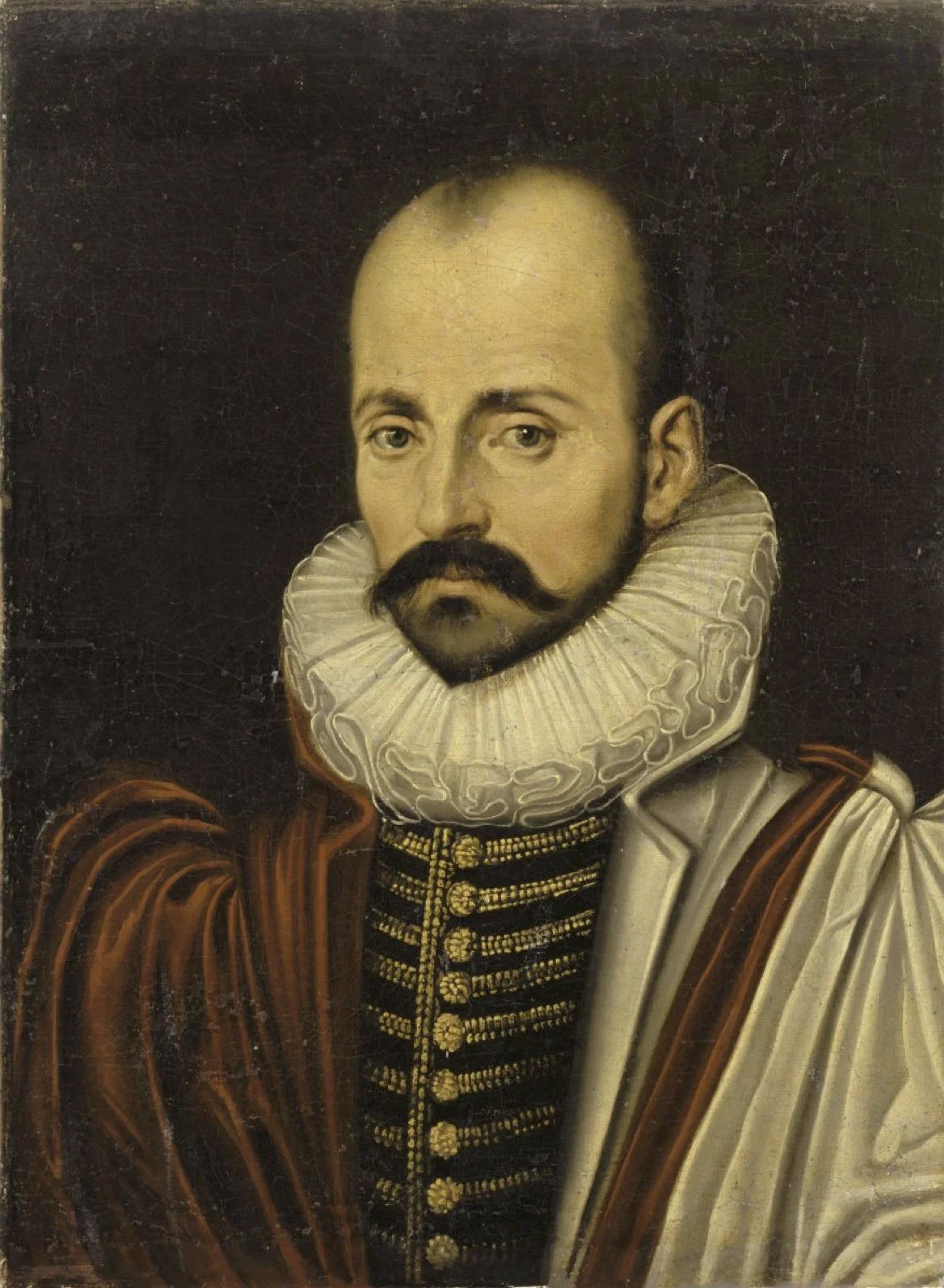
To the Reader
Reader, here is an honest book. It warns you straight away that I only meant for it to be private, for my family, and never once considered either your service or my reputation. I do not have the strength for such a design. I wrote it for my relatives and my friends so that once I am gone (which may be soon) they may find in it again remnants of my personality and thoughts, and remember me in a more complete and lifelike way. Had I been seeking public attention, I would have made myself look better and presented myself more carefully. But I want you to see me as I am, in a plain, natural, and ordinary way, free of pretense and artifice. I am the one depicted here. My faults and my very self are exposed for all to see, at least as much as public conventions will let me. Had I lived among those nations, which (they say) still live under the sweet liberty of nature’s primitive laws, I assure you I would easily have painted myself quite fully and quite naked. So, reader, here I am, the subject of my book, and I see no reason why you should spend your free time on so unimportant and pointless a topic. Farewell, then!
from Montaigne, March first, 1580.
https://hyperessays.net/essays/to-the-reader/
The Text
A selection of Michel de Montaigne’s Essais:
Book 1, Chapter 8, “On Idleness”
Book 1, Chapter 38. “On Solitude”
Book 2, Chapter 10. “On Books”
Book 3, Chapter 13. “On Experience”
You are also to select one essay from the Table of Contents each to assign to the group. You will also furnish a single discussion question related to your selected essay.
Discussion Questions
Montaigne proclaims that his literary form contains an unimportant and pointless topic, but it is this very topic that is of interest to him as the writer and his intended audience, his family. Who do we think then is the reader addressed in the prefatory essay, and why would we spend our free time thinking about Montaigne?
In “On Idleness” Montaigne decries the stampede of ideas that come when idle, and offers that the essay is in some way an attempt to discredit the appearance of idle thoughts. What is the relationship you have between your idle thoughts and your writing process?
When Montaigne claims in “On Solitude” that a “wise man never loses anything if he has himself,” what is at stake? Is it the same historically as contemporaneously?
Montaigne begins “On Experience” with the declaration that “There is no desire more natural than that of knowledge.” What can we expect to “know” by journaling?